Best Software for BRSR Reporting: Comprehensive Guide for Sustainability Reporting in India

We, at Oren, are working with public companies to help them create their first-ever BRSR (Business Responsibility and Sustainability Report). The first step of this process is to collect and manage the ESG data.
Some companies are just overwhelmed by the sheer volume of data required in comparison to the BRR (Business Responsibility Report), while others are struggling to locate essential ESG data points, and still, others are struggling to coordinate across multiple locations to gather all the data in one single place.
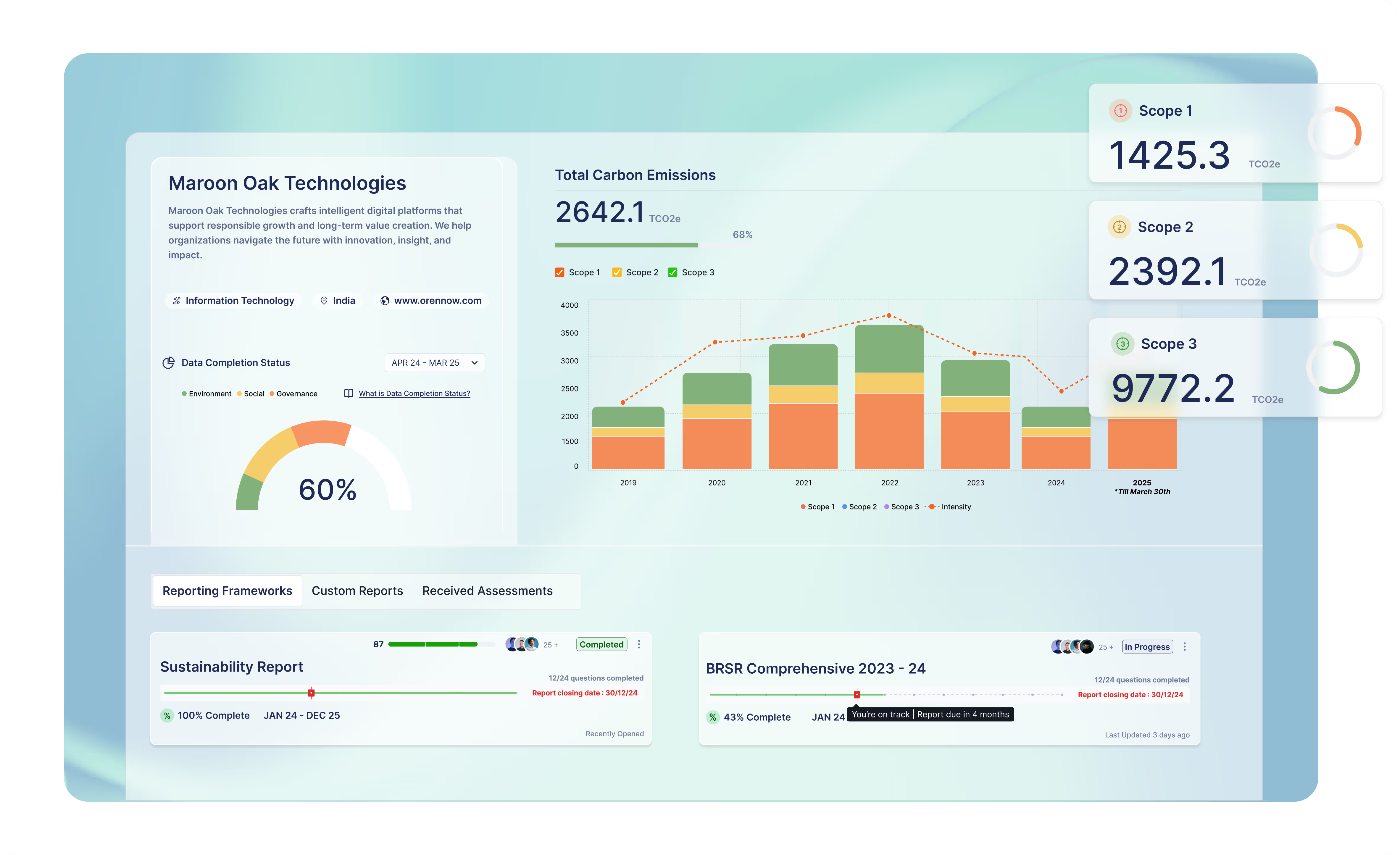
One question that comes up a lot is why using a technology platform, like Prism, is better than adopting a manual process for the same. You can call us biased, but we strongly believe that using technology through any kind of ESG reporting can be game-changing.
Here are some reasons why:
- Ease and accuracy of data collection: Companies are using excel sheets, Microsoft Word documents, pdfs, emails, and sometimes even WhatsApp to exchange essential ESG data that will eventually become part of their BRSR. The tedious task of putting all this data together falls on the shoulders of the sustainability team, who are now spending the better part of their day just sifting through heaps of data. Using technology would reduce this step that takes months down to real-time. Some software, like Prism, integrates directly with the existing enterprise applications present in the company to automatically collect data in real-time.
- Ease of calculations and conversions: The data required for the BRSR is a lot more complex than that needed for the BRR as it requires complex calculations and conversions. One example of this is the global warming potential (GWP) and the emissions factor. Using a technology platform handles all this complexity so that the sustainability teams just have to focus on the enterprise data. Sustainability teams now don't have to jump between the websites of the International Energy Agency (IEA), IPCC, UNFCCC, and Moody's to find the right calculation factors.
- All relevant metrics and KPIs in one place: Another good thing about using technology is that it doesn't stop with the collection of data. With the right kind of technology partner, you can go a step further and play around with those numbers. You can have all the ESG metrics and KPIs in one place which will enable you to measure your sustainability performance and goals over the long term.
- Easy collaboration with all departments and locations: To create a BRSR, companies need to collect data from the entirety of their operations, not just the headquarters. This requires collaboration from almost all departments like administration, human resources (HR), operations, finance, legal, etc., and all the locations. When companies run this process manually, they end up with hundreds of excel sheets all carrying data in different units and formats.
- Easy transfer of data across multiple frameworks: Some companies are preparing more than one ESG report this year, so they find themselves collecting data for BRSR and then creating another version of it for GRI (Global Reporting Initiative). This means spending twice the amount of time on the same task. Using the right technology platform will solve that. Not only will you have to spend less time collecting data for one reporting standard, but you can ensure that data gets transferred across reporting standards with zero effort.
- Shortened reporting time: Given all the benefits listed above, using technology brings down the BRSR data collection, management, and reporting process by months. Ditching the manual process and excel sheets for data collection helps you bring all your ESG data owners into one place.
We, at Oren, have built the perfect technology for your BRSR needs. Our platform, Prism, collects and manages data while you sleep! Prism directly integrates with your existing enterprise applications to automatically collect your enterprise data and convert it into ESG data. Book a demo today and discover the magic for yourself.