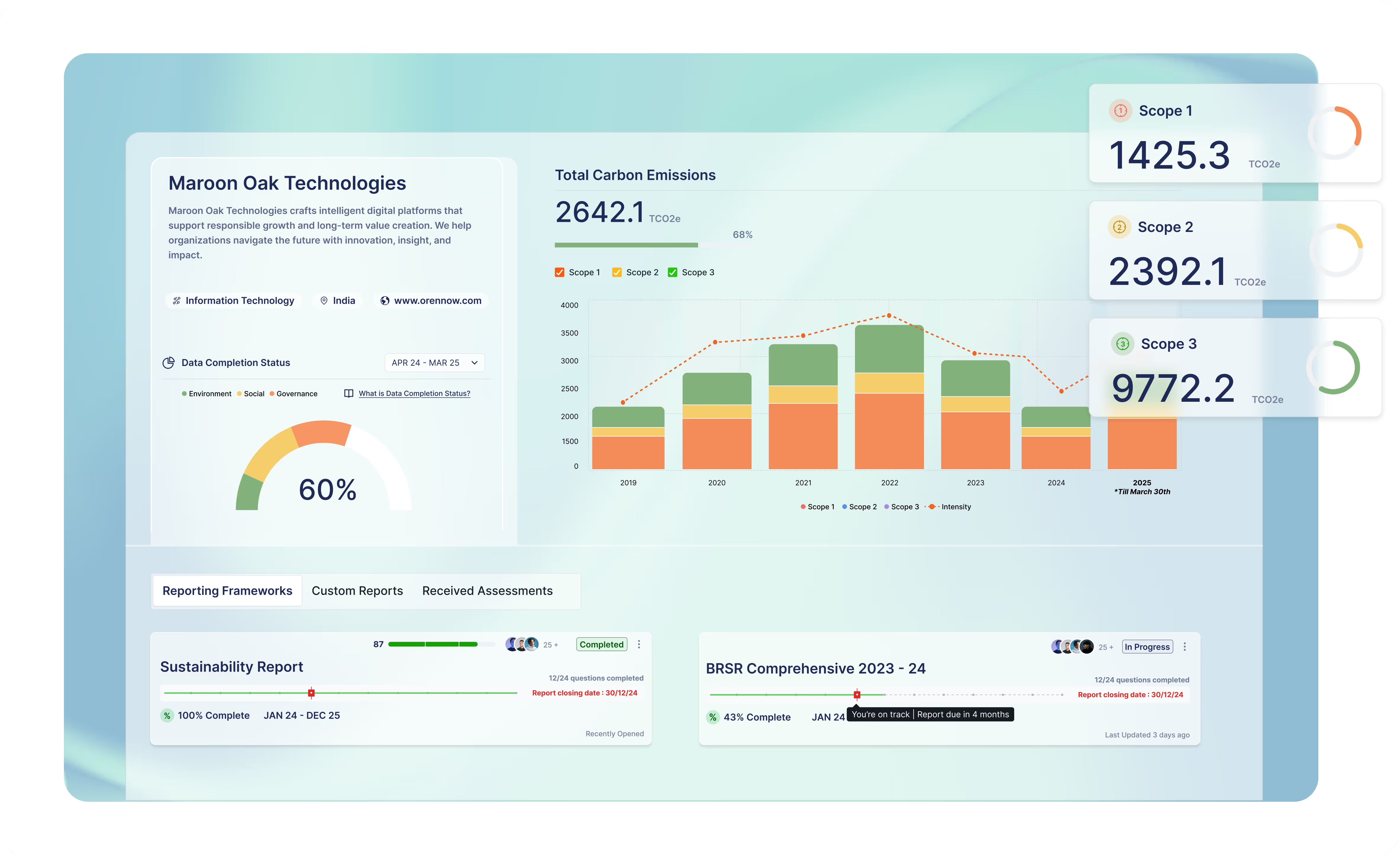
What is Business Responsibility and Sustainability Reporting (BRSR) and Why is it Important?
BRSR is a comprehensive framework introduced by the Securities and Exchange Board of India (SEBI) for listed Indian companies. It requires businesses to disclose their performance on environmental, social, & governance (ESG) factors and prepare a structured Business Responsibility and Sustainability Report aligned with prescribed BRSR standards. The BRSR, which more closely aligns with global sustainability reporting standards, replaces the earlier Business Responsibility Report (BRR).
The objective of BRSR is to encourage companies to move beyond a solely financially focused mindset and consider their impact on people and the planet. By providing quantifiable metrics on things like energy consumption, water usage, employee well-being, and ethical conduct, the BRSR helps investors and other stakeholders make more informed decisions.
For businesses, BRSR reporting is important because it builds stakeholder trust, improves risk management, and can lead to a competitive advantage. It helps companies identify areas for improvement in their BRSR sustainability practices, attract conscious investors, and meet the growing demand from consumers and employees for corporate responsibility.
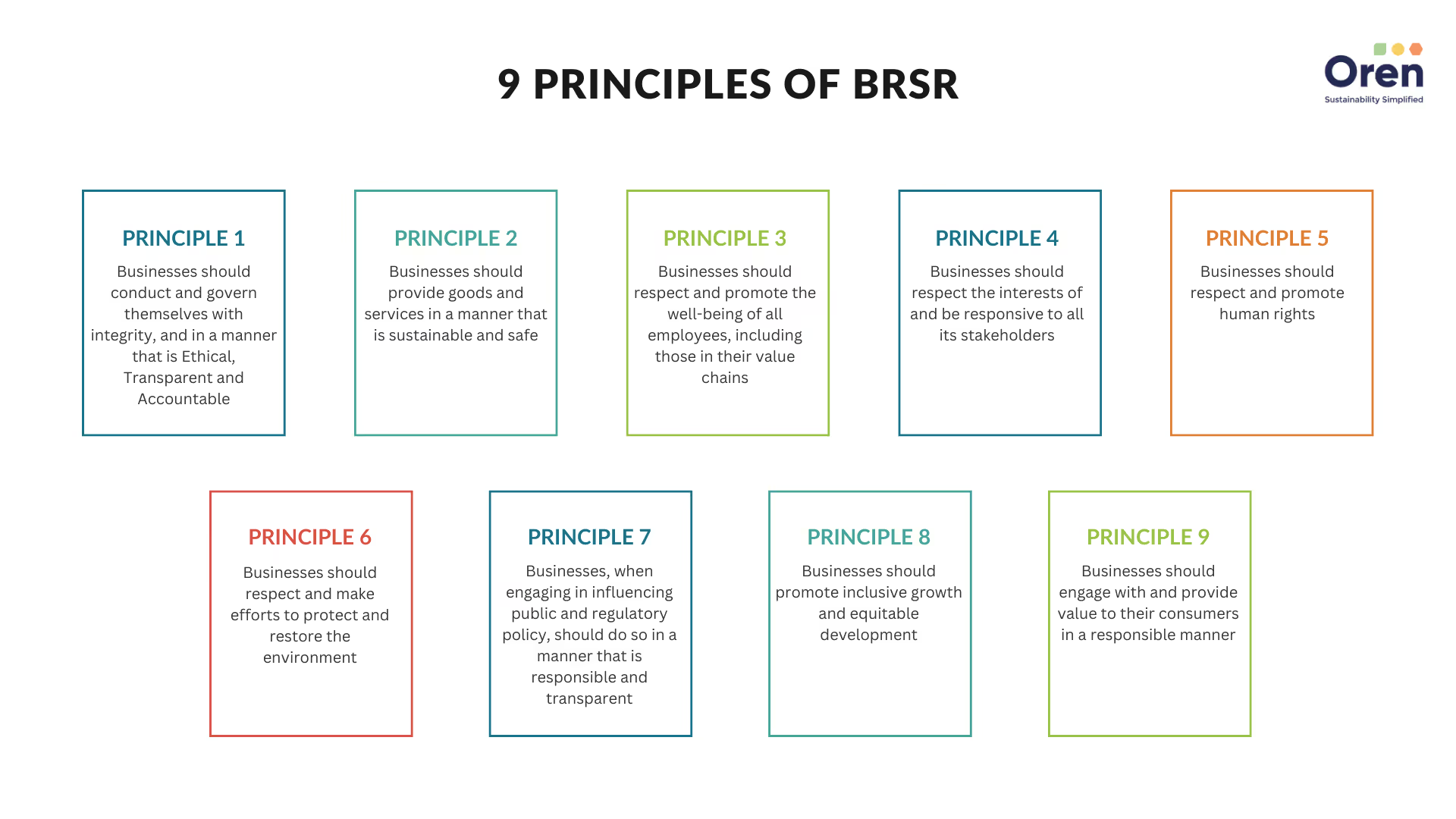
Eligibility for Business Responsibility and Sustainability Reporting (BRSR)
BRSR is mandatory for the top 1,000 listed companies in India, ranked by market capitalisation. This requirement is a significant step by the SEBI to increase corporate transparency and accountability based on ESG parameters.
While mandatory for these top companies, other listed and non-listed companies, including those on the Small and Medium Enterprises (SME) exchange, are encouraged to adopt BRSR on a voluntary basis. This promotes wider adoption of responsible business practices across the corporate sector.
Understanding Business Responsibility and Sustainability Reporting (BRSR) Framework
| Framework Element | Description |
|---|
| NGRBC Alignment | Performance metrics based on the 9 BRSR principles outlined under the National Guidelines on Responsible Business Conduct (NGRBC). |
| Section A: General Disclosures | Covers organisational profile, financials, operations, and regulatory information. |
| Section B: Process and Management Disclosures | Addresses the company's governance structure, policies, stakeholder engagement, and sustainability integration into business strategy. |
| Section C: Principle Wise Performance | Requires companies to report KPIs related to the 9 NGRBC principles under Essential and Leadership indicators. |
| Essential Indicators | Mandatory metrics showcasing minimum disclosures related to each principle. |
| Leadership Indicators | Voluntary metrics that highlight best practices and advanced ESG maturity. |
Primary Disclosure Areas in BRSR
1. Three Main Disclosure Areas in BRSR
- Company overview: operations, locations, and employee count
- Financial details: turnover, net worth, and market cap
- Ownership and corporate structure
- Products/services offered and markets served
2. Management and Process Disclosures
- Governance mechanisms for ESG oversight
- Policy disclosures related to ethics, environment, and stakeholder rights
- Engagement with stakeholders on ESG topics
- Risk identification and management processes
3. Principle-wise Performance Disclosures
- Quantitative and qualitative indicators under each of the 9 NGRBC principles
- Split into Essential Indicators (mandatory) and Leadership Indicators (voluntary)
- Focus on ESG impacts, mitigation actions, outcomes, and value chain practices
Nine Core Disclosure Categories (Aligned with NGRBC Principles)
- Ethical Governance — integrity, transparency, accountability
- Product Lifecycle Sustainability — safety, sustainability, responsibility
- Employee Wellbeing — equity, development, support
- Stakeholder Engagement — dialogue, responsiveness, communication
- Human Rights — respect, promotion, protection
- Environmental Stewardship — reduction, sustainability, conservation
- Policy Advocacy — transparency, responsibility, engagement
- Inclusive Growth — community, economy, development
- Customer Value — marketing, pricing, service
BRSR as a Pathway to ESG Integration
1. Materiality Mapping
Identify the key ESG factors that are most critical to your industry and business. This ensures reporting is focused on what truly matters to the company's value.
2. Stakeholder Prioritisation
Engage with key stakeholders (employees, customers, investors) to understand and incorporate their concerns and expectations. This aligns the company's ESG strategy with the needs of those it impacts.
3. Digital Audit Trail
Maintain a transparent and verifiable digital record of all ESG-related data and metrics. This ensures data accuracy, supports third-party assurance, and builds trust with investors and regulators.

Comprehensive BRSR Reporting for Strategic Sustainability
Oren's AI-driven BRSR platform, Oren Sustainability Hub, combined with expert-led BRSR services, transforms regulatory reporting into a strategic sustainability advantage. We begin with a customised approach for every business, regardless of its size. First, we help you with materiality mapping to identify the most critical ESG factors for your industry and operations. This is followed by stakeholder prioritisation, in which we engage with key stakeholders to understand their concerns and expectations.
This deep dive allows us to build a comprehensive sustainability strategy that goes beyond basic reporting. By maintaining a digital audit trail, our platform ensures that all your data is transparent and verifiable, making your reports assurance-ready for third-party verification. The result is a robust BRSR report that not only meets SEBI's standards but also serves as a clear roadmap for optimising your sustainability efforts and maximising your long-term impact.
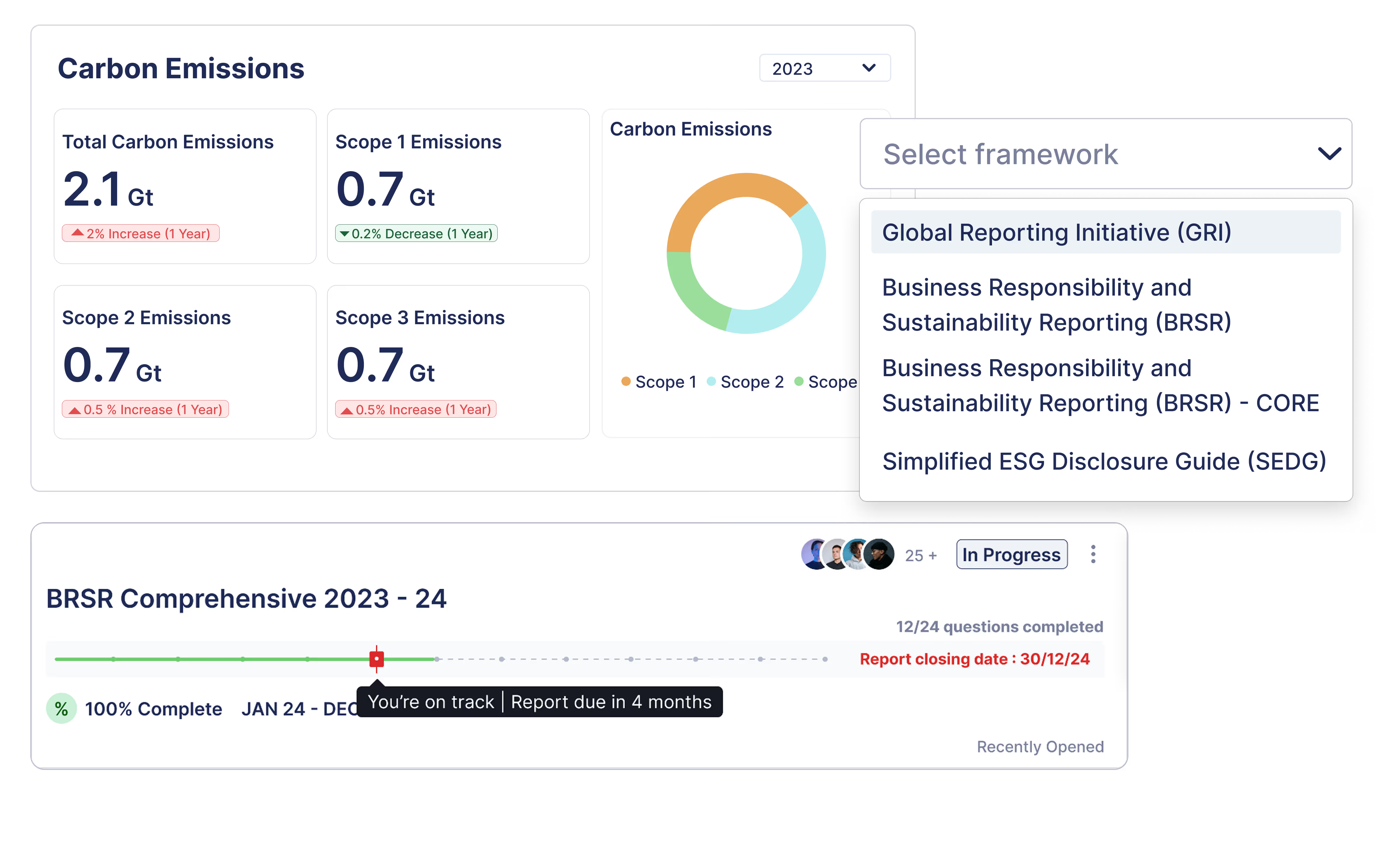
Consequences of Non-Compliance with BRSR Mandates
Failure to comply with SEBI's BRSR requirements can expose companies to a range of legal, financial, and reputational risks. These include:
1. Regulatory Penalties
Non-compliance with BRSR mandates may lead to penalties, fines, or enforcement actions by SEBI under the Securities Contracts (Regulation) Act.
2. Stock Exchange Disclosures
Exchanges may flag non-compliant companies, affecting investor sentiment and impacting stock performance.
3. Investor Distrust
Lack of ESG transparency can result in reduced interest from institutional investors and ESG-focused funds, leading to limited access to sustainable capital.
4. Reputational Damage
Public scrutiny and media attention on poor ESG disclosure can harm brand image and customer trust.
5. Operational Setbacks
Delays in reporting may reflect poor governance structures, leading to internal inefficiencies and misalignment with corporate goals.
6. Supply Chain Risks
Non-compliance may affect vendor credibility and reduce opportunities with global clients requiring ESG disclosures across the value chain.
7. Future Regulatory Pressure
Delayed adoption now can make it harder to meet more stringent future ESG regulations and assurance requirements.
Automated, Efficient, and Impactful BRSR Reporting
Oren Sustainability Hub transforms the complex task of BRSR reporting into an automated, efficient, and impactful process. With our SaaS solution, companies can move seamlessly from data collection to final report publishing, confidently meeting SEBI's stringent ESG standards. Our tools emphasise a data-driven approach, using automated workflows and AI features to ensure accuracy and save valuable time. You can collect and organise crucial sustainability data with ease, eliminating manual labour and reducing the risk of errors.
Once the data is in, our platform provides real-time data visualisation, turning complex BRSR information into interactive dashboards and charts. This allows for clear, engaging, and transparent communication with all stakeholders. By automating the entire reporting lifecycle, our platform helps you maximise the impact of your sustainability initiatives and provides a clear path towards demonstrating your commitment to responsible business practices.
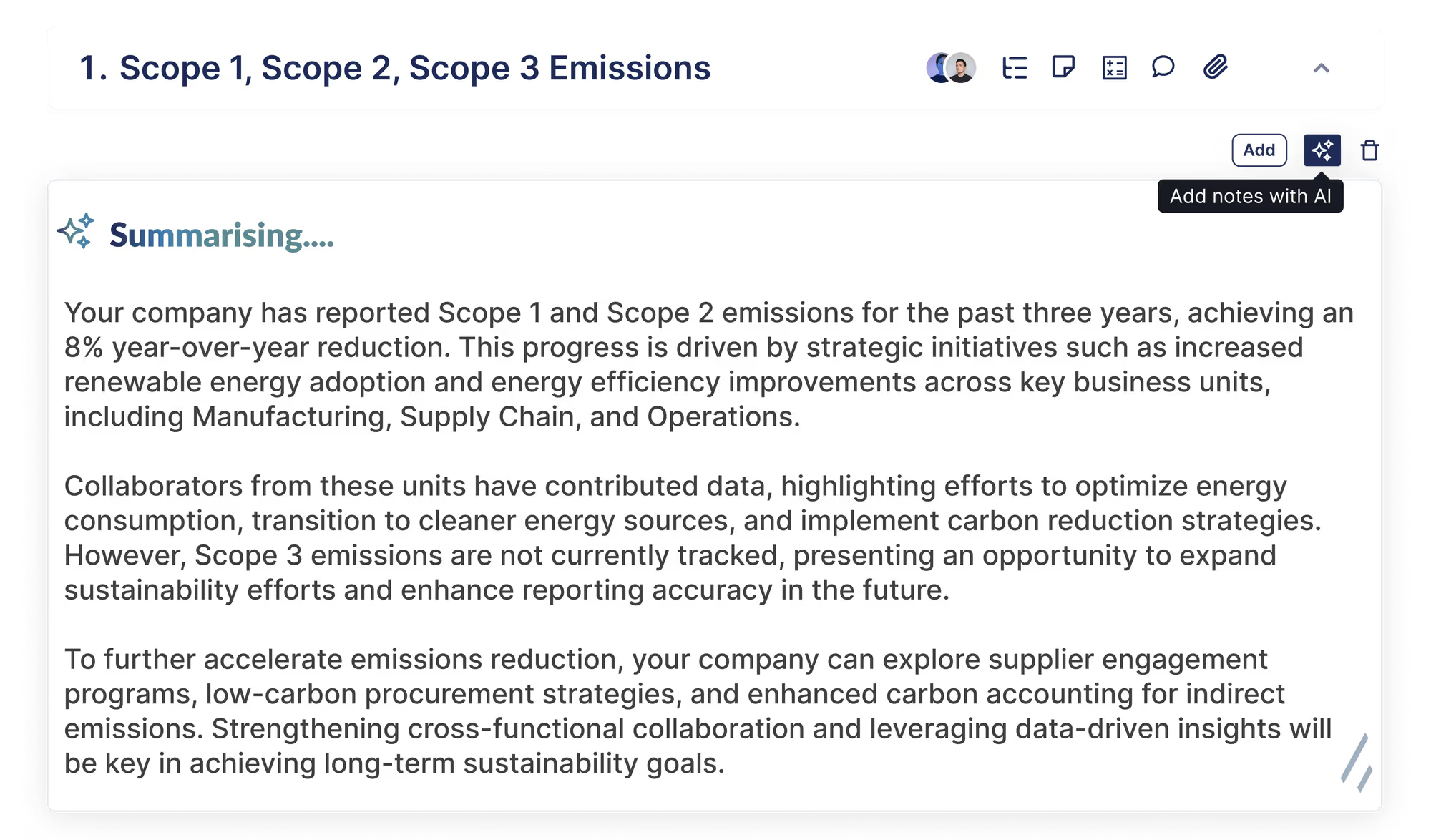
Measuring and Demonstrating Alignment with BRSR Principles
Our service helps companies quantify and track their adherence to each BRSR principle by providing a structured framework for data collection and analysis. We utilise specific metrics and benchmarks, such as GHG emissions per unit of revenue for Principle 6 (Environment) or the percentage of employees trained on human rights for Principle 5.
The platform allows businesses to input data, which is then automatically tracked and compared against industry benchmarks and past performance. This approach provides a clear, measurable picture of a company's progress toward its sustainability goals. By transforming qualitative principles into quantifiable indicators, our service ensures that businesses can demonstrate their commitment to responsible practices with verifiable data.