Comprehensive Guide to ESG Data Management & Reporting Software

Why ESG Reporting & Data Management Are Now Boardroom Priorities
Rather than simply being a compliance exercise, ESG reporting has now become a boardroom priority, driven by strict investor scrutiny, evolving regulation and increased risk exposures. Organisations must substantiate sustainability claims with accurate, consistent and auditable ESG data.
Further, gaps in data management & reporting lead to regulatory action and increase board-level accountability risks. With rising expectations for transparency, the boards must ensure that ESG data management software supports reliable reporting. This protects reputation, investor confidence and long-term business value.
What ESG Data Management Software Actually Does for Your Business?
ESG data management software refers to the special tools that assist organisations to collect, track, analyse and report their ESG performance. It eases complex data management and helps gain actionable insights while supporting compliance with different reporting frameworks.
ESG software helps businesses understand their ESG performance by providing real-time updates about their progress, data quality and insights. It also assists in risk management and supports cross-functional teamwork. Additionally, the businesses also benefit from improved reputation, investor confidence, operational efficiency, and subsequently cost-efficiency.
Why Leaders Invest in ESG Data Management & Reporting
The leaders' focus on ESG data management & reporting is being witnessed as the risks of poor ESG governance now directly and negatively impact the enterprise value. Contrastingly, reliable, proper ESG data management & reporting reduces regulatory and compliance risk. It also supports faster reporting cycles that help meet tight disclosure timelines.
Organisations can even attract investors who assess ESG maturity by offering a strong and consistent report through the use of the best ESG reporting tools. Hence, while improving credibility, it improves access to sustainable finance, green bonds and funding. Additionally, better ESG ratings enhance valuation and leader confidence, subsequently elevating the market reputation.
Evolution of ESG Software: Adapting to Modern Needs
ESG data management software has evolved from simple data management tools into strategic and integrated platforms that serve the dynamic business needs. It now helps meet the rising regulatory pressure and stakeholder expectations correctly and efficiently. The spreadsheets used earlier have been replaced/integrated with automation. It reduces data handling errors and improves consistency.
The adaptation has further progressed into integrated workflow-driven systems that enable structured data movement, approvals and accountability. Proceeding forward, the ESG platforms are also now being integrated with AI to support predictive insights, faster analysis and proactive risk identification.
Modern businesses now expect real-time data access, seamless integration with the enterprise system and continuous reporting readiness. The evolution exhibits a shift from reactive compliance to strategic and always-ready ESG intelligence at the leadership level.

Key Considerations When Selecting ESG Reporting & Data Management Software
The ESG reporting and data management software should offer the following capabilities:
1. ESG Data Centralisation
It should provide a single source for data access across the organisation. It should streamline data collection and validation by removing fragmented data and improving accuracy through structured validation.
2. Global Framework Support
It must support key frameworks such as GRI, BRSR, CSRD, CDP, IFRS S1 & S2, CBAM, and SBTi, along with other emerging global standards. It ensures consistent regulatory alignment and long-term reporting readiness across regions.
3. Integrated and Growth Aligned Infrastructure
Effective ESG data management software should integrate seamlessly with HR, finance and ERP systems to enable continuous data flow. Scalability is equally critical. Hence, ensure the platform can support business expansion, new regulatory demands and increasing reporting complexity without disruption.
4. Leadership Dashboards for Risk Reduction
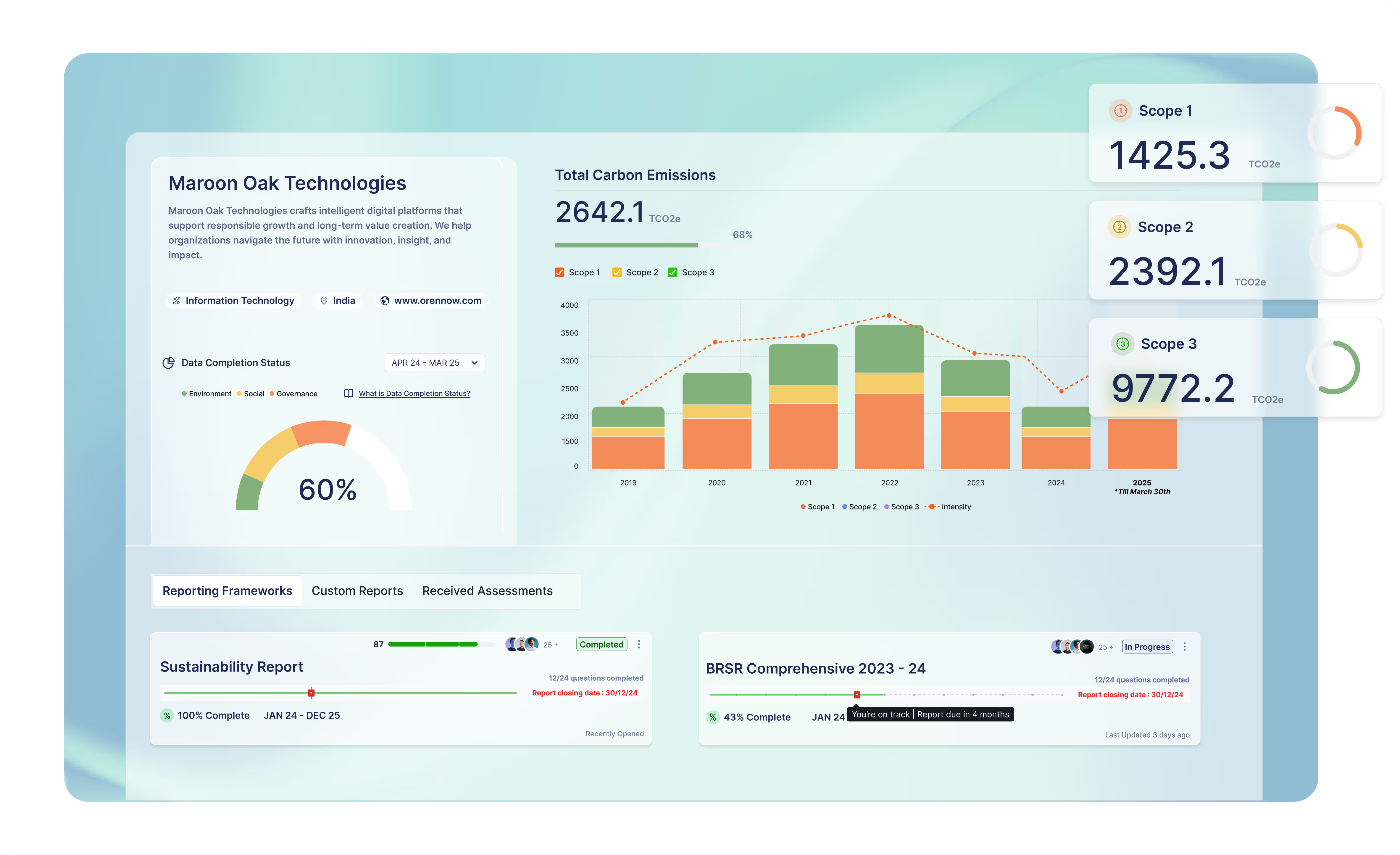
It should offer an executive dashboard that converts ESG data into clear and decision-ready insights. It will allow leaders to monitor performance trends, identify emerging risks early and respond proactively rather than reactively.
5. Benchmarking
The software should enable performance comparison against industry peers to highlight gaps and identify areas for continuous ESG improvement at the strategic level.
6. Stakeholder Engagement
It must facilitate transparent communication with investors, regulators and other stakeholders regarding ESG programmes, processes and outcomes. It strengthens credibility, trust and long-term engagement.
7. Risk, Security and Reporting Assurance
Complete audit trails and strong security controls ensure that every ESG figure remains traceable, verifiable and protected. It improves external audits, protects regulatory reports and builds trust in governance at the board level.
Leadership Checklist: How to Evaluate ESG Software Vendors
The right ESG software vendor should be the one who focuses on execution, risk exposure and long-term reliability. The vendor of choice should demonstrate the following qualities:
- Proven ESG and industry expertise with an enterprise implementation record
- Delivery with clear onboarding and delivery timelines with ownership
- Reliable customer success and global support for sustainable adoption
- Strong security and compliance backed by recognised certifications
- Transparent pricing and contract terms with predictable long-term costs
Moving from Evaluation to Execution: Your ESG Software Action Plan
Now, after selecting the ESG software vendor, it is time to execute the software action plan to maximise value. Here is how you should go:
Step 1: Establish Project Governance
Assign executive sponsors and create cross-functional teams to oversee the ESG software implementation.
Step 2: Develop a Detailed Onboarding Plan
Define clear milestones and timelines for data integration, validation and system configuration.
Step 3: Deliver Users Training and Change Management
Ensure teams are trained, and new ESG workflows are integrated to encourage adoption.
Step 4: Monitor Progress and Compliance
Track implementation progress regularly and address any gaps to meet reporting deadlines and regulatory requirements.
Step 5: Conduct Regular Reviews
Hold meetings with the vendor and internal stakeholders to optimise system use and incorporate new features.
Conclusion: Turning ESG Reporting into a Strategic Advantage
ESG reporting, besides being a compliance task, is a strategic asset for business resilience and market trust. AI, automation and supply chain ESG are gaining prominence, and companies must use advanced data management systems to keep up with them. Choosing the right ESG software empowers leaders with reliable insights, speeds up decision-making and strengthens access to sustainable finance. Thus, it helps attain long-term value.
FAQs
1. What are the three main elements of ESG reporting?
The three main elements of ESG reporting are Environmental, Social and Governance. The Environmental factors include emissions and resource use, the Social aspects involve workforce diversity and community impact, and the Governance deals with board structure and ethics.
2. What is ESG data management?
ESG data management deals with collecting, validating, analysing and reporting sustainability-related data. Proper data management helps ensure accuracy, transparency and compliance with evolving standards.
3. What is ESG in simple words?
ESG stands for Environmental, Social and Governance. These are the three key areas that businesses must manage to operate responsibly, reduce risks and meet stakeholder expectations.