Understanding Science-Based Targets (SBTs)
Before diving into SBTN, it's important to understand what Science-Based Targets (SBTs) actually means. SBTs offer essential frameworks for businesses to align their own environmental ambitions with the ecological boundaries of the planet, catalysing legitimate and quantifiable action on sustainability. In addition to climate targets, the idea is spreading to include nature-related effects through initiatives such as Science-Based Target Network (SBTN), which hopes to establish analogous scientific targets for corporates to tackle their impacts on biodiversity, water, land, and oceans.
By establishing SBTs, businesses can have a clear, evidence-driven roadmap for decarbonisation and, increasingly, nature based targets. This commitment leads to tangible gains such as improved reputation, lower regulatory risk, enhanced investor confidence, and operating efficiencies. Most importantly, SBTs ensure transparency and accountability, enabling stakeholders to monitor performance against scientifically based thresholds.

How SBTN Differ from SBTi?
While SBTN and SBTi share a common goal of driving science-based corporate action, they differ significantly in scope, methodology, and alignment. Understanding these differences is essential for companies seeking to build a comprehensive environmental strategy.
| Feature | SBTN | SBTi (Climate Targets) |
|---|
| Primary Focus | Holistic planet health encompassing all aspects of nature | Limiting global warming by reducing greenhouse gas (GHG) emissions |
| Scope | Broad, covering freshwater, land, oceans, and biodiversity alongside climate | Narrower, focused solely on Scope 1, 2, and 3 GHG emissions from operations and value chains |
| Goal | Achieve a "nature-positive" future by halting and reversing nature loss | Align corporate emissions with the Paris Agreement to limit warming to 1.5°C or well-below 2°C |
| Key Areas Addressed | Land/sea-use change, direct exploitation of resources, ocean health, biodiversity | CO2, CH4, N2O, and other GHG emissions across value chains |
| Drivers of Impact | Land/sea conversion, resource exploitation, climate change, pollution, invasive alien species | Greenhouse gas emissions from energy, industry, transport, and land use |
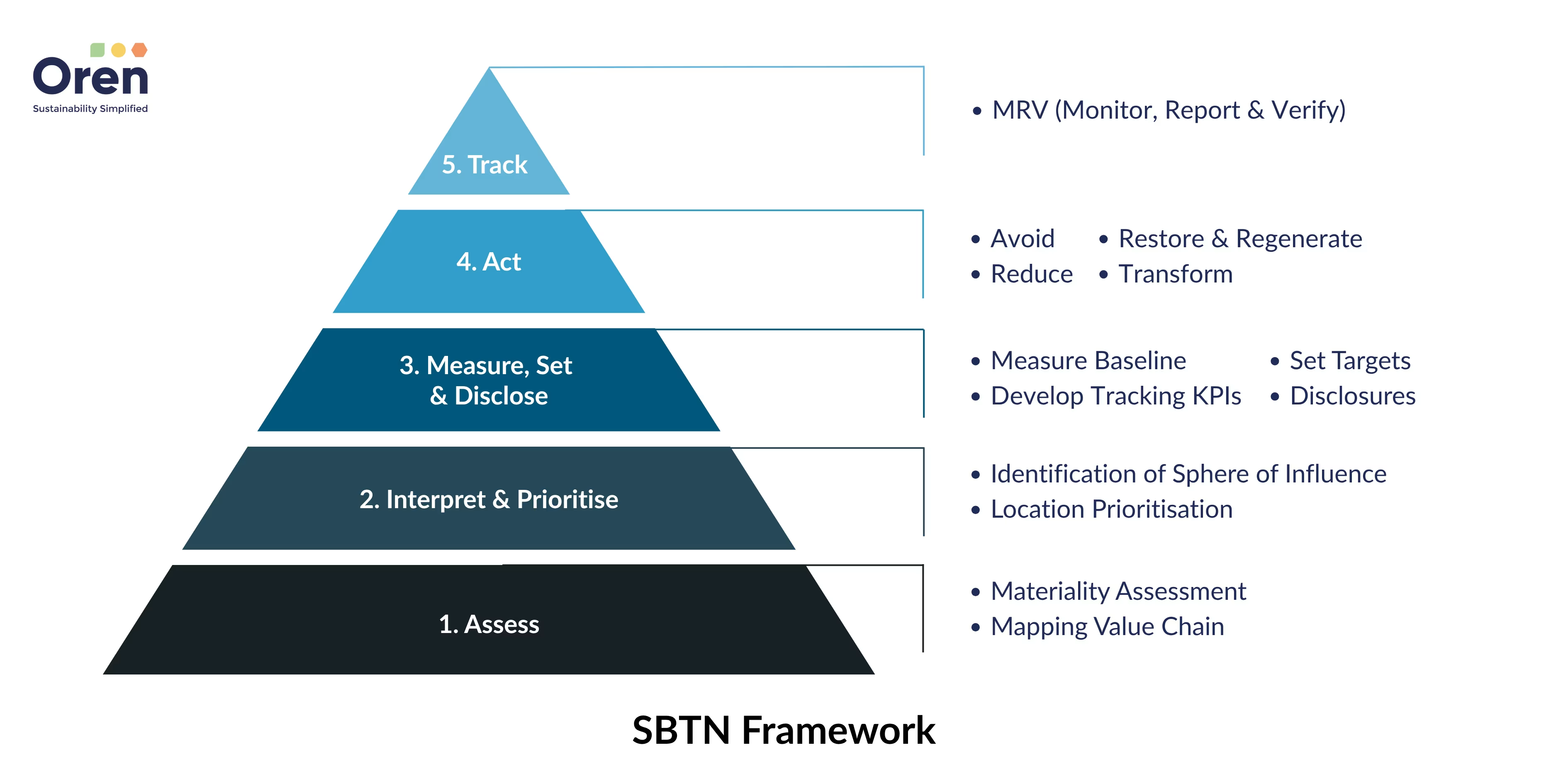
| Methodology | Five-step AR3T process (Assess, Interpret & Prioritise, Measure, Act, Track) | Emission reduction pathways based on climate science |
| Inter-connectedness | Acknowledges the interconnection of environmental challenges across multiple domains | Focuses on climate as a distinct but related challenge |
How is the SBTN Framework Formulated to Drive Nature-Positive Action?
The SBTN framework follows a science-based process that begins with building a baseline understanding of a company's most critical environmental impacts and how its business and supply chains affect the natural environment.
Initial screening identifies "material" effects — those areas where an organisation has the greatest adverse impact or reliance on nature. These effects are connected to what IPBES identifies as the five immediate drivers of nature loss: land/sea-use change, direct exploitation of organisms, pollution, climate change, and invasive alien species.
Interpretation and prioritisation then identify key ecosystem hotspots that require remedial action, based on species extinction risk, ecosystem integrity, and regions of high biodiversity importance. Targets are then measured, established, and reported, particularly across critical nature domains such as freshwater, land, and oceans.
How can you Implement & Track your progress with SBTN?
Companies interested in setting and tracking science based targets for nature can start their journey by following SBTN guidance with Oren's expert support. This structured methodology ensures a systematic and science-based roadmap towards nature-positive actions:
Step 1: Assess
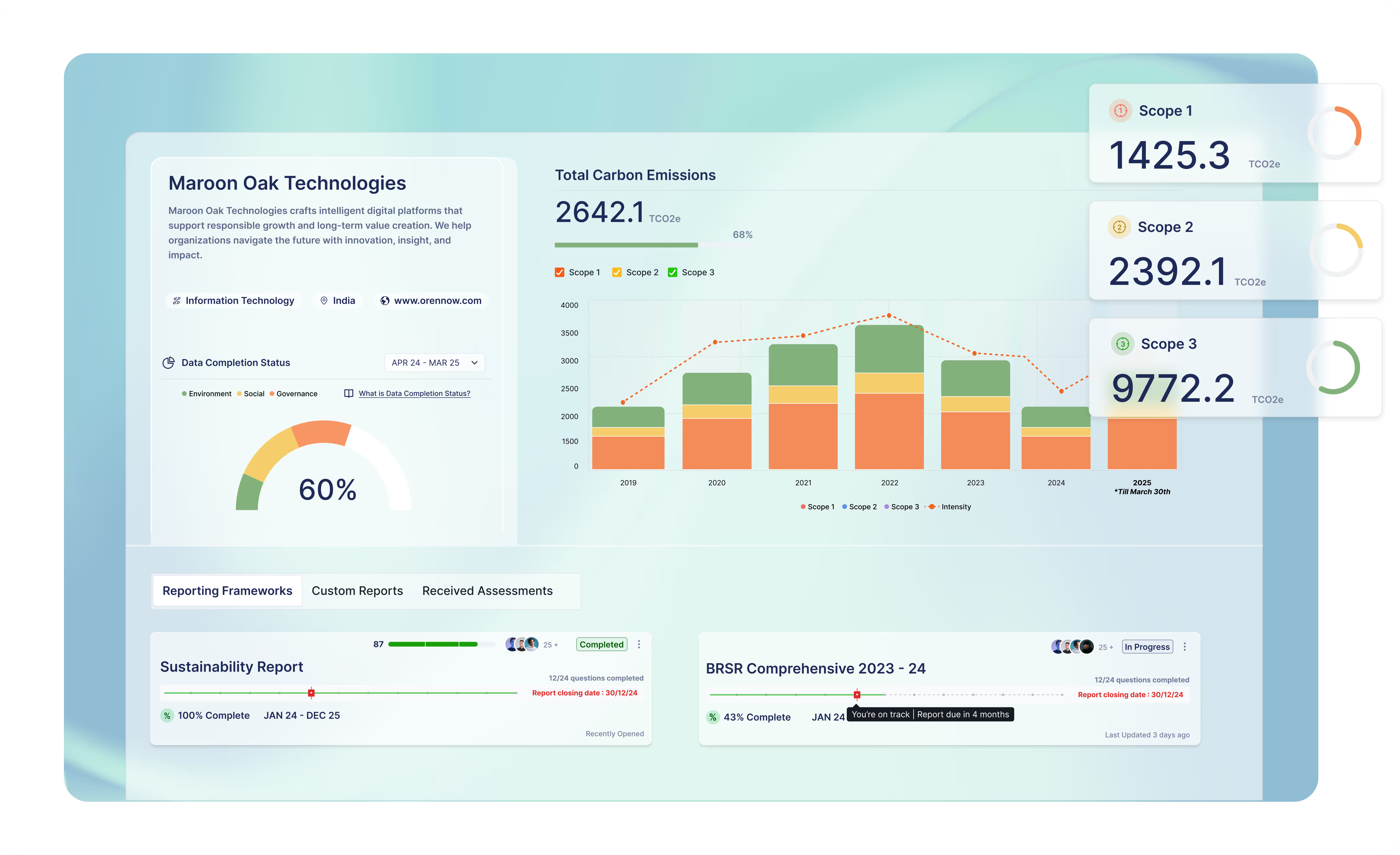
The process starts with a thorough evaluation of the company's entire value chain to understand its impacts on and dependencies on nature. This involves conducting a materiality assessment to identify which environmental pressures (e.g., water withdrawals, land conversions, pollution) are most significant for the business and where in its operations or supply chain these impacts occur. We will leverage our AI-powered ESG data management platform, Oren Sustainability Hub, to streamline these activities.
Step 2: Set Priorities
Once the assessment is complete, the next step is to identify priority areas where the company can have the greatest positive impact. This involves interpreting the assessment results, setting target boundaries (e.g., specific river basins or land areas), and ranking the most critical issues based on environmental significance and business relevance.
Step 3: Measure and Set Goals
In this step, companies quantify their current impacts and establish measurable, time-bound targets for specific nature domains. For freshwater, this could mean reducing water withdrawals below a sustainable threshold; for land, it could involve achieving zero deforestation across supply chains. SBTN guidance provides technical methodologies for each domain, ensuring targets are scientifically robust.
Step 4: Act
With targets in place, companies implement strategies to achieve them. Actions may include adopting regenerative agriculture practices, improving water efficiency in operations, preventing habitat conversion, or engaging in landscape-level conservation initiatives.
Step 5: Track
The final step involves continuously monitoring progress against targets, verifying data, and adjusting actions as needed using Oren Sustainability Hub. This ensures accountability and allows companies to adapt their strategies in response to changing conditions or new scientific insights.
SBTN Integration and Expert Support
Successfully implementing SBTN service in your business requires constant support from specialised, experienced experts. Oren's SBTN service, along with our AI-powered ESG platform, provides a systematic process, guaranteeing you cover each step of your SBTN for nature journey with accuracy.
As your implementation partner, Oren offers validation and disclosure assistance, ensuring full compliance with SBTN principles so you can confidently make public target disclosures and regulatory reports. Our industry-specific knowledge and tailored solutions cater to a range of stakeholders, including investors, financial institutions, and corporates.
Talk to Oren's experts today to start your SBTN journey!
How Enterprises Benefit from SBTN's Framework
Adopting SBTN's framework delivers significant strategic advantages for enterprises, extending far beyond regulatory compliance. Companies that embrace science-based targets for nature position themselves for long-term resilience and competitive advantage.
1. Regulatory Preparedness
By actively establishing SBTN, companies can remain ready for changing nature-related rules, such as the Taskforce on Nature-related Financial Disclosures (TNFD) and the EU's Corporate Sustainability Reporting Directive (CSRD), making it easier to follow these rules in the future.
2. Enhanced Risk Mitigation
SBTN helps companies systematically identify and mitigate nature-related risks, including resource scarcity (such as water), supply chain disruptions from biodiversity loss, and reputational damage. By proactively addressing these risks, businesses build operational resilience and protect their long-term financial performance.
3. Innovation and Cost Savings
The rigorous analysis required for setting nature-based targets often uncovers opportunities for innovation in processes, products, and supply chains, leading to greater efficiency and cost reductions.
4. Access to Capital
Investors increasingly factor nature-related risks and opportunities into their decisions. By aligning with science-based targets for nature, companies can improve their access to sustainable finance and attract environmentally conscious investors.

Science Behind SBTN Nature Targets
The Science-Based Targets for Nature (SBTN) initiative leverages the success of Science-Based Targets (SBTs) by recognising the urgent interdependencies between natural loss and climate change. The degradation of natural systems, such as forests, wetlands, and oceans, reduces their capacity to sequester carbon, thus accelerating climate change. Conversely, a changing climate causes biodiversity loss and ecosystem collapse.
The SBTN framework is based on current scientific knowledge about planetary boundaries and ecological thresholds, using reports from bodies like the IPCC and IPBES. It offers a consistent framework for measuring business effects and nature dependencies across five domains: freshwater, land, ocean, biodiversity, and climate.
Achieve Measurable Impact with SBTN
Oren's SBTN service solutions enable companies to set and pursue ambitious, science-based goals for nature with measurable effects in key environmental areas. Our end-to-end approach centres on the SBTN Framework, implementing the AR3T hierarchy to systematically address nature-related impacts.
This includes Assessment & Readiness Planning with workshops, AI-powered data collection, and biodiversity footprint analysis to determine primary impact areas and build strong baselines. The process is systematic, producing measurable outcomes and KPIs that demonstrate tangible progress.
Are you ready to measure & manage your impact on nature? Talk to Oren's experts to begin your SBTN for nature journey!