What is TNFD?
The Taskforce on Nature-related Financial Disclosures (TNFD) is a market-led initiative that offers a standard structure on which businesses and financial institutions can identify, evaluate, handle, and reveal nature-related reliance, effects, risks, and opportunities.
The TNFD framework seeks to move financial flows to nature-positive by promoting regular reporting of biodiversity and ecosystem requirements, as TCFD did in the case of climate. The framework is designed on the basis of governance, strategy, risk & impact management, and metrics and targets to ensure organisations consider nature issues in the main decision-making and financial planning.
Why Does it Matter?
Nature loss creates real business risks:
- Supply chain disruption
- Resource scarcity
- Regulatory exposure
- Reputational harm
With large institutions already committing to adopt TNFD recommendations, early adoption eliminates transition risk, enhances investor confidence, and places companies in a position to align with changing regulatory and other stakeholder expectations.
Starting now gives you time to collect location-based data, refine the metrics, and come up with believable targets before TNFD disclosure requirements become mandatory in certain jurisdictions.
Why TNFD is Critical for Businesses
Not sure where to start with TNFD or how it fits into your existing ESG and climate reporting? Our experts can walk you through the framework and help you chart a practical path forward.
TNFD Framework – LEAP Approach Explained
The TNFD framework recommends the LEAP approach (Locate, Evaluate, Assess, and Prepare) as a useful tool to proceed with high-level intent to specific actions in regard to nature-related risks. You first,
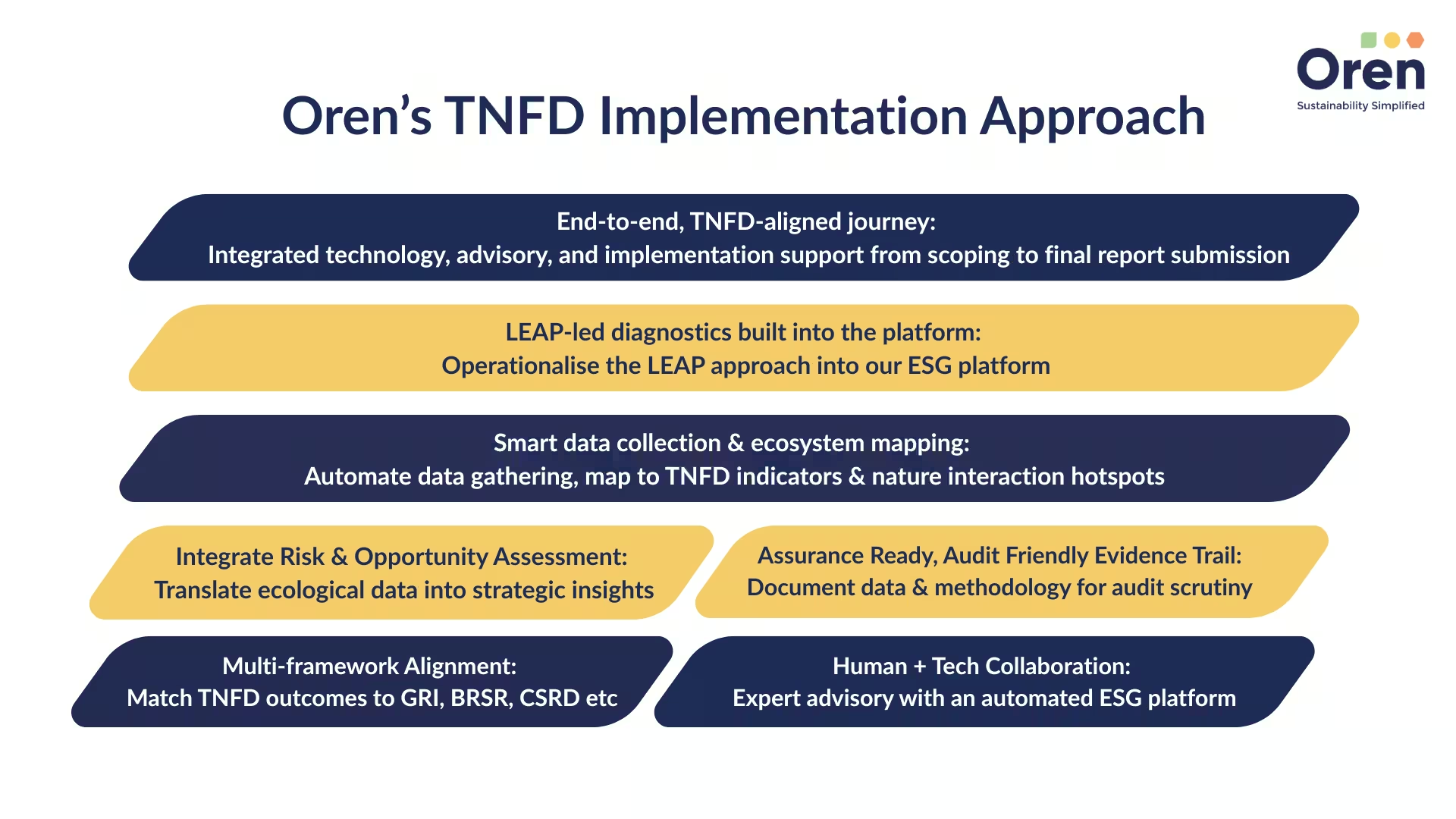
- Locate where your business interacts with nature across operations and value chains
- Then Evaluate dependencies and impacts in those locations.
- Then Assess the ensuing risks and opportunities financially and strategically.
- Finally, Prepare your response: governance, targets, scenarios, and disclosures aligned with TNFD.
Oren embeds this LEAP workflow into its digital platform and TNFD services advisory so teams can follow it step by step.
| Stage | What It Does |
|---|
| Locate | Identify locations and value-chain interfaces with nature |
| Evaluate | Map dependencies & impacts to ecosystem assets and services |
| Assess | Prioritise material risks/opportunities and run scenario tests |
| Prepare | Integrate into strategy, set targets, and disclose findings |
TNFD vs TCFD: What's the Difference?
TNFD and TCFD are similar in structure, based on governance, strategy, risk management, and metrics, but focus on different themes of the environment: nature vs climate.
- TCFD is mainly concerned with the financial risks and opportunities related to climate, in particular, transition and physical climate risks associated with the emission of greenhouse gases.
- The TNFD framework addresses a larger range of nature dimensions, ecosystems, biodiversity, land, oceans, freshwater, and the way businesses rely on and affect them.
- TCFD has become a part of numerous regulatory frameworks, and has informed IFRS S2, whereas TNFD is more recent and is beginning to be mentioned in new rules and voluntary pledges.
- For many organisations, the most efficient approach is to integrate TNFD with current TCFD and ESG reporting frameworks, with common data, governance, and risk frameworks.
| Feature | TNFD | TCFD |
|---|
| Primary Focus | Nature / biodiversity | Climate / GHG |
| Process | LEAP (location-based) | Climate scenario & risk pillars |
| Data Type | Ecological, spatial, and biodiversity | Emissions, energy, scenarios |
| Use Case | Nature risk & opportunity management | Climate risk / transition planning |
Who Needs TNFD Reporting?
- Big listed corporations and conglomerates with huge environmental imprints or exposed to nature-based sectors (agri-food, mining, energy, infrastructure).
- Financial institutions, banks, asset managers, and insurers that require a better understanding of nature-related risks in portfolios and lending services.
- Multinationals that have complex global supply chains are dependent on land, water, raw materials, or ecosystem services.
- Firms that are already reporting within frameworks such as TCFD or CSRD are expanding TNFD disclosure to include the risks associated with nature.
- Early movers striving to address the expectations of investors and establish themselves as nature-positive leaders.
| Stakeholder Type | Why They Need It |
|---|
| Listed & large enterprises | Manage material nature-related risks |
| Banks & lenders | Assess borrower exposure and portfolio vulnerability |
| Investors & asset managers | Price nature risk in capital allocation |
| Insurers | Model underwriting and physical risks linked to nature loss |
| Multinationals with global supply chains | Understand upstream nature dependencies |
If your organisation falls into any of these groups, or you're simply unsure how exposed you are to nature-related risk, then connect with us.
Unsure About Your Nature-Related Exposure?
Let our TNFD reporting services experts assess your organisation's nature dependencies and help you understand the risks and opportunities across your value chain.
Oren's TNFD Implementation Approach
We implement TNFD in a phased, pragmatic way that balances technical rigour with your organisation's capacity, so you get a TNFD report that's both credible and usable.
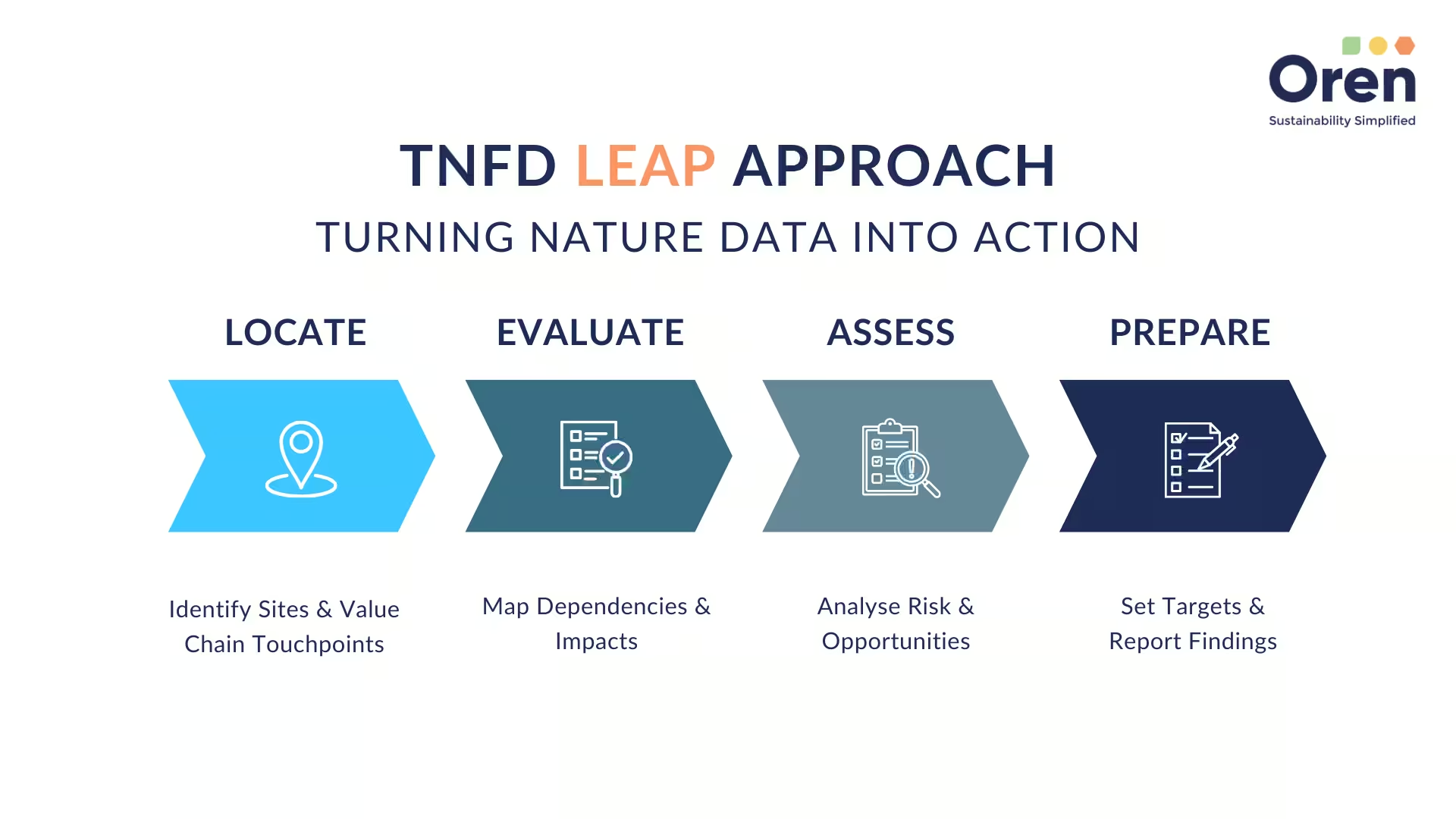
- End-to-end, TNFD-aligned journey: Oren integrates technology, advisory, and implementation support to ensure you receive support throughout the scoping process to the final report submission.
- LEAP-led diagnostics built into the platform: We directly operationalise the LEAP approach within our ESG platform, which assists the teams to progress through every phase with workflow templates, guided workflows, and sector-specific checklists.
- Smart data collection and ecosystem mapping: Oren automates data gathering among entities, locations, and suppliers and maps the data to TNFD indicators and nature-interaction hotspots, consuming less manual effort and exposures that are often overlooked.
- Integrated risk and opportunity assessment: Our specialists collaborate with your teams to turn ecological data into monetary and strategic data and focus on risks by materiality and emphasise new prospects in nature-positive products, sourcing, and partnerships.
- Assurance-ready, audit-friendly evidence trail: All data, assumptions, and methodologies are documented in an organised manner to ensure that your nature disclosures will withstand internal audit, investor inspection, as well as external assurance should they be required.
- Multi-framework alignment, not a silo: We also match TNFD results to the current ESG reporting, such as TCFD, CSRD, GRI, BRSR, and others, which helps you avoid duplicate work and can reuse data, metrics, and narratives across frameworks.
- Continuous improvement, not one-off reporting: Oren's TNFD solutions support progressing refinements, peer comparison, and regular review such that your TNFD process advances as regulations, science, and business priorities change.
- Human + tech partnership: Our ESG and climate specialists collaborate with your leadership, risk, and sustainability teams, grounding the digital platform's outputs in your context and making sure the end result feels practical, not theoretical.
Measuring and Demonstrating Nature Risk Impact
- Oren assists in transforming the qualitative nature of interactions into quantitative measures, which include ecosystem condition, water stress, land-use change, biodiversity sensitivity, and associated financial exposures.
- We bring operational, supplier, and site data into the digital platform and cross it with external data (such as where there is a water shortage or a conservation zone) to determine where nature risk clusters occur.
- Based on our workflows, we instruct you to relate the physical and systemic nature risks, e.g., diminished yield, regulatory limitations, or reputational injury, to the effects on revenue, expense, asset, and financing.
- We assist you in investigating various nature-related situations and stress tests, then risk-rank them according to their probability, intensity, and strategic conditions — a structured TNFD status report that makes it easier to concentrate on what truly counts.
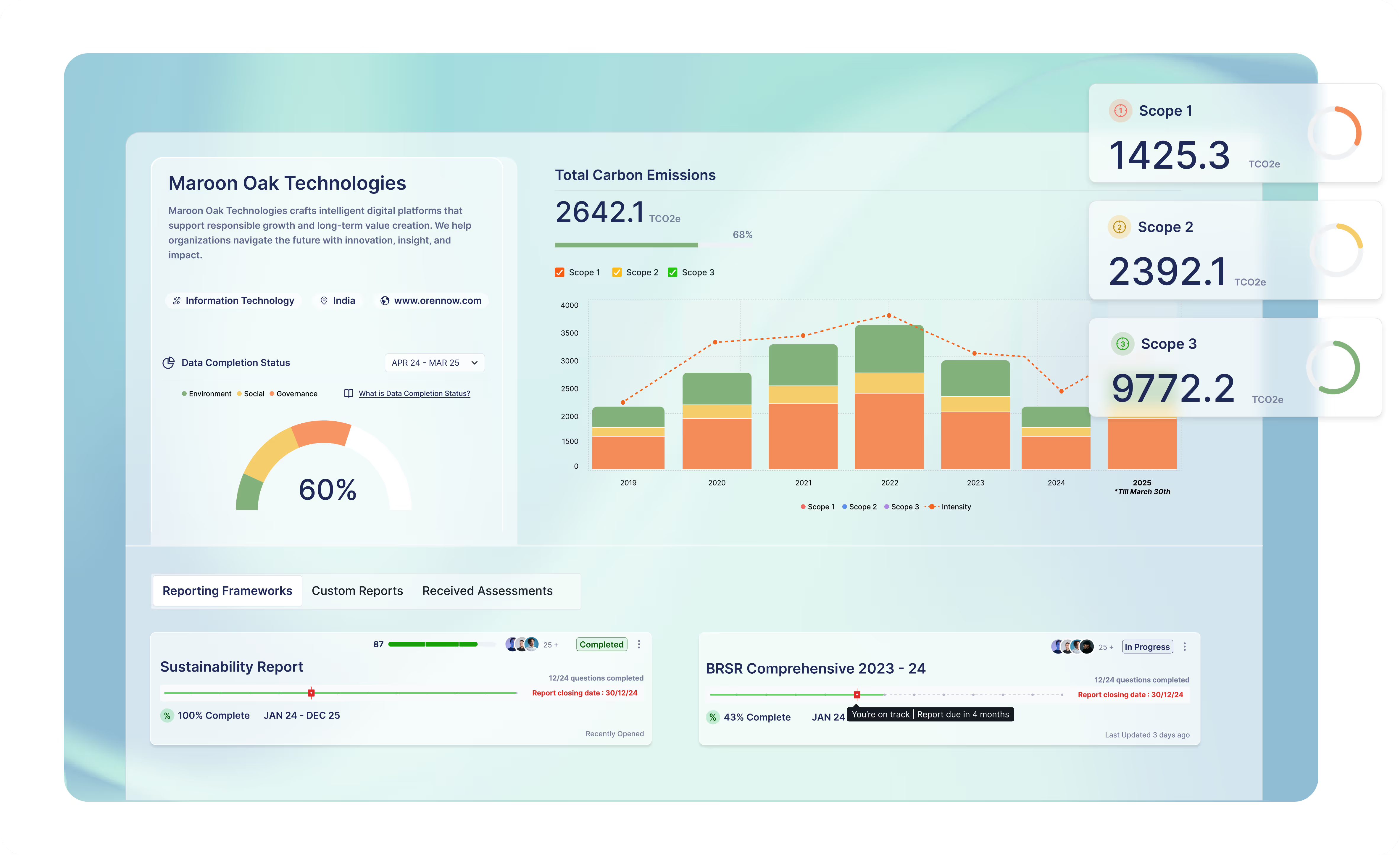
- Nature-risk perspectives are presented on dashboards, heatmaps, and brief narrative summaries, which can be included in your TNFD report as well as wider sustainability reports.
Food & Beverage Manufacturer
A regional food and beverage company relies heavily on agricultural commodities from water-stressed regions. Using Oren, they mapped sourcing locations, did an overlay of water-risk data, and assessed drought and regulation in relation to crop availability, prices, and production costs.
This analysis led to diversified sourcing, as well as investing in water-efficient activities with major suppliers, and providing more vivid TNFD-aligned disclosures on nature dependencies and mitigation strategies.
Ready to Map Your Nature Risk?
Talk to an Oren expert to walk through our TNFD services, understand data requirements, and design a practical next step that fits your team.
Consequences of Ignoring TNFD
- Unreported nature dependencies may manifest as unexpected expenses — shortages in supply, fluctuations in commodity prices, or a rise in insurance premiums.
- Jurisdictions are progressively transitioning to compulsory TNFD reporting; a lack of preparation may result in fines, remedial compliance expenses, or imposed operational adjustments.
- Stakeholders (investors, customers, communities) expect transparency; failure to report credible TNFD disclosures can trigger divestment, boycotts, or negative media scrutiny.
- Nature is being factored in lending screens by lenders and investors so that inadequate disclosure may restrict access to capital or drive up borrowing costs.
- Firms that do not prioritise nature cannot gain the value of ecosystem restoration, sustainable sourcing, or green financial instruments in which nature-friendly behaviour gets rewarded.
The bottom line? Ignoring TNFD doesn't make nature-related risk disappear; it makes those risks opaque and likely costlier when they surface.